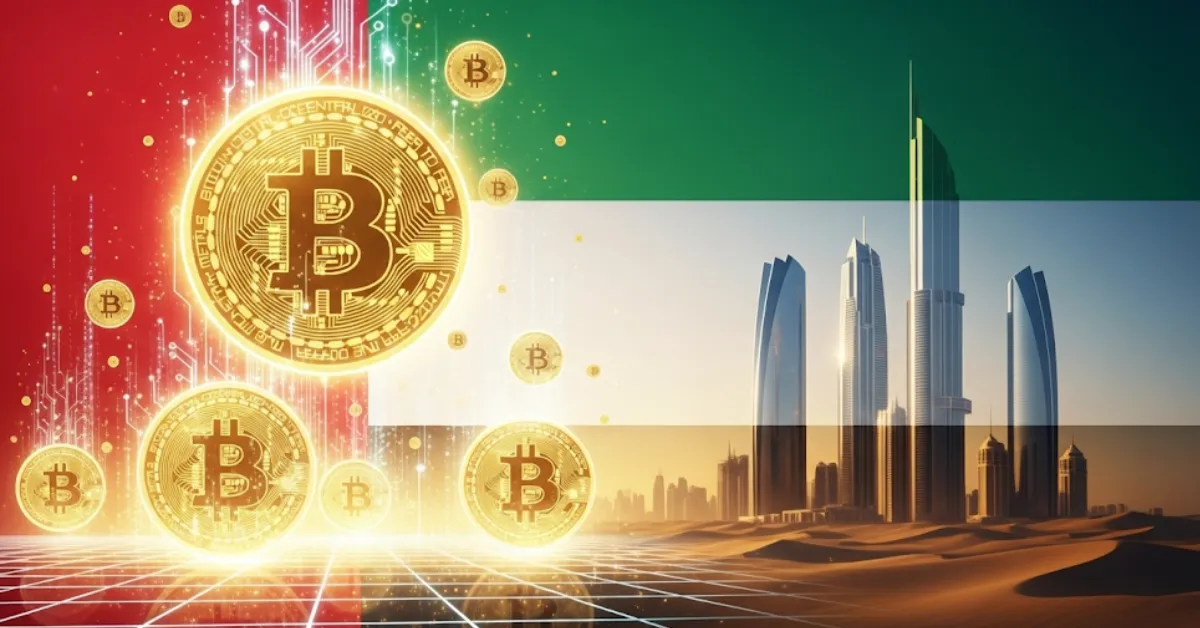
The United Arab Emirates has quietly climbed into the top ranks of sovereign Bitcoin holders. With a reserve now valued at around $740 million, the UAE stands as the fourth-largest government Bitcoin holder in the world, signaling its growing ambition in the digital asset space.
UAE Mines Its Way Into the Global Top Four
Unlike most countries where governments acquire Bitcoin through seizures or purchases, the UAE has taken a different approach. According to blockchain analytics firm Arkham Intelligence, the UAE government controls about 6,333 BTC through Citadel Mining, a state-backed company.
-
Controlled via Royal Group & IHC – Citadel Mining is overseen by the UAE Royal Group, mainly through International Holding Company (IHC).
-
Built on mining, not seizures – While the U.S. and China accumulated their reserves largely through confiscations, the UAE has been mining its own Bitcoin.
-
Partnership with Phoenix Group – The country’s mining capacity has been expanded with the help of Phoenix Group, a major player in blockchain infrastructure.
This strategy makes the UAE stand out. Instead of waiting for seized assets, it is building its reserves directly, using favorable regulations and large-scale mining facilities.
How the UAE Compares Globally
The UAE now sits just behind the United States, China, and the United Kingdom in terms of government-held Bitcoin.
-
United States – Holds over 200,000 BTC (around $20 billion), mostly from criminal seizures.
-
China – Despite banning crypto trading, it still retains a large stash of confiscated Bitcoin.
-
United Kingdom – Holds significant reserves also built from seizures.
The UAE’s $740M reserve may seem small compared to the U.S., but the fact that it has been self-mined rather than confiscated marks a big difference.
Why This Move Matters
This development highlights three key points about the UAE’s economic vision:
-
Diversification of the economy – By adding Bitcoin to its reserves, the UAE is signaling it doesn’t just want oil wealth, but also digital wealth.
-
Sovereign control over assets – Mining its own Bitcoin ensures the reserves are completely sovereign, without reliance on external purchases.
-
Positioning as a crypto hub – With Abu Dhabi and Dubai already hosting major exchanges and blockchain initiatives, this reserve cements the UAE’s role as a digital asset leader.
UAE vs. El Salvador: Different Paths to Bitcoin
The UAE’s strategy contrasts with El Salvador, which became famous for making Bitcoin legal tender. While El Salvador’s government buys Bitcoin directly from the market, the UAE is mining and storing its own supply.
This approach is more resource-driven and long-term, relying on infrastructure and regulation rather than speculation.
Could the UAE Spark a Regional Trend?
The move could encourage other Middle Eastern countries to explore government-backed Bitcoin reserves. Brazil has already revealed plans to build a strategic reserve, and it wouldn’t be surprising if nations like Saudi Arabia or Qatar follow suit.
The UAE’s Bitcoin mining push reflects a broader vision: becoming a global leader in blockchain innovation. Its mix of regulation, infrastructure, and sovereign Bitcoin holdings could serve as a model for other governments aiming to strengthen their digital asset strategy.
Also Read: Is Cardano on the Edge of a Breakout as Ripple Partnership Rumors Grow?
FAQs
1. How much Bitcoin does the UAE government hold?
The UAE controls about 6,333 BTC, valued at around $740 million at current prices.
2. How did the UAE acquire its Bitcoin?
Unlike most countries, the UAE mined its Bitcoin through Citadel Mining, a state-backed mining company, instead of seizing it from criminal cases.
3. Which countries hold the most government Bitcoin?
The United States leads with more than 200,000 BTC, followed by China, the United Kingdom, and now the UAE.
4. Why is this significant for the UAE?
It shows the UAE’s intention to diversify its economy, strengthen its blockchain industry, and establish itself as a leader in digital assets.
5. Could other Middle Eastern nations follow the UAE’s path?
Yes. The UAE’s mining strategy might inspire neighboring states to consider sovereign Bitcoin reserves as part of their future economic plans.