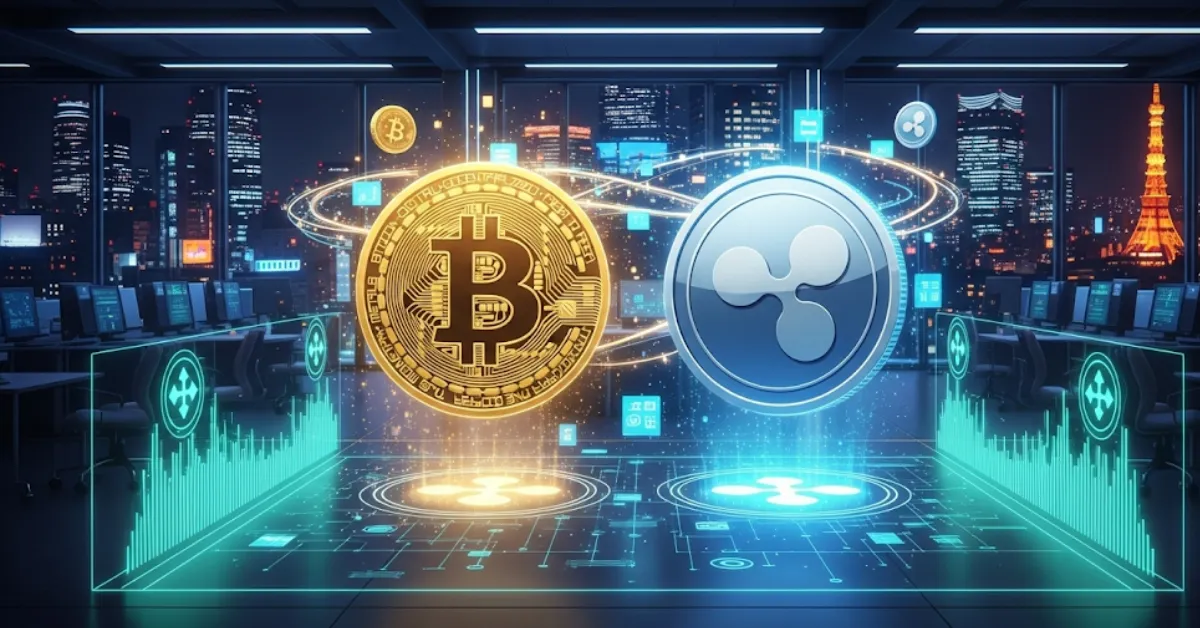
Japanese gaming and blockchain company Gumi has made another bold move in the crypto space by creating a new XRP-based treasury worth 2.5 billion yen (about $17.2 million). The company says the treasury will help it expand into financial services and cross-border payments, while also complementing its earlier Bitcoin investment.
Why Gumi is Building an XRP Treasury
This isn’t Gumi’s first crypto-related investment. Earlier in 2025, the firm spent 1 billion yen ($6.7 million) on Bitcoin, which it now uses in staking protocols like Babylon to earn additional income. But this new step is different: instead of holding XRP only for price gains, Gumi is focusing on its real-world use in remittances and liquidity networks.
By doing so, the company is showing that it sees XRP not just as another cryptocurrency, but as a core part of the financial technology ecosystem, especially for international payments.
Key Takeaways
-
Gumi purchased 2.5 billion yen ($17M) worth of XRP.
-
Bitcoin will serve as a long-term store of value, while XRP will power cross-border transactions.
-
The move aligns closely with SBI Holdings, Gumi’s largest shareholder, which is also heavily invested in XRP.
-
The purchase period will run from September 2025 to February 2026, giving the firm several months to build its treasury.
Partnership with SBI and Ripple’s Ecosystem
Gumi’s strategy is tightly connected with SBI Holdings, which is known for its strong support of XRP and Ripple. With SBI as its biggest shareholder, Gumi’s move looks like a natural extension of SBI’s broader financial vision.
Interestingly, Ripple also launched its RLUSD stablecoin in Japan recently. This development signals that the Japanese market is warming up to wider XRP adoption, creating a solid foundation for companies like Gumi to benefit from growing liquidity and international settlement solutions.
Balancing Bitcoin and XRP
Gumi’s crypto plan now rests on two pillars:
-
Bitcoin – held as a long-term store of value and used in lending, DeFi, and wrapped BTC platforms to generate extra returns.
-
XRP – positioned as a functional network asset, designed to power remittances, liquidity, and financial settlements.
This dual approach allows Gumi to balance wealth preservation with utility-driven growth, while also keeping an eye on quarterly performance to evaluate market value and its effect on earnings.
A Growing Trend Among Asian Companies
Gumi isn’t alone in this strategy. Across Asia, several firms are beginning to diversify their treasuries with digital assets. For example, China’s Linklogis recently partnered with the XRP Ledger to power global supply chain finance.
This shows a larger trend: corporations in Japan and Asia are not only experimenting with crypto but actively integrating it into their financial structures. By holding both Bitcoin and XRP, Gumi is betting on a future where blockchain plays a central role in payments, liquidity, and long-term asset growth.
FAQs
1. Why did Gumi buy XRP instead of more Bitcoin?
Gumi already owns Bitcoin and uses it for staking and long-term value storage. XRP, on the other hand, is meant for cross-border payments and liquidity, which gives the company a different type of utility.
2. How much XRP did Gumi purchase?
The company purchased 2.5 billion yen worth of XRP, which equals around $17.2 million.
3. What role does SBI Holdings play in this move?
SBI Holdings is Gumi’s largest shareholder and has long supported XRP adoption in Japan. Gumi’s XRP purchase aligns directly with SBI’s blockchain and payments strategy.
4. Will Gumi keep buying crypto in the future?
Yes, Gumi has hinted that it will continue monitoring the market quarterly. If the conditions are favorable, it may expand both its Bitcoin and XRP holdings.
5. Why is this move important for Japan’s crypto market?
Japan is one of the most crypto-friendly countries, and large firms adopting XRP and Bitcoin show growing institutional trust. Moves like Gumi’s could push more Japanese companies to create digital asset treasuries.